Inside Working Wonders Barbershop, the sound of clippers and steady conversation fills the room, reflecting a space where a haircut is often only part of what clients come for.
For owner Jamie Wood, the barbershop is more than a place for grooming.
“I believe the barbershop means a lot to the Black community,” Wood said.
Throughout the day, conversations between barbers and clients often move beyond daily life into stress, relationships, and personal challenges.
Wood said the barbershop is a “safe haven” where people can open up about problems and issues.
According to GoodRx, a typical therapy session lasts about 45 to 50 minutes. Barbers said haircuts often take a similar amount of time. In that setting, conversation between the barber and client is important as the haircut, and at times more, because of its therapeutic value.
“The ‘cut’ is the topping on the cake,” said Victor Ross, a barber at Pro One Barbershop, noting the focus is often the conversational exchange between barber and client.
Mental health professionals say trusted spaces can play a role in the emotional well-being of Black men.

“It’s important for Black men to convene in common safe spaces like barbershops, salons, and gyms,” said Dr. Jimmy Henry, national director of mental wellness for the African American Male Wellness Agency (AAMWA). “Too often we [Black men] suffer from isolation and loneliness, and these trusted spaces are key to our [Black men’s] mental wellbeing.”
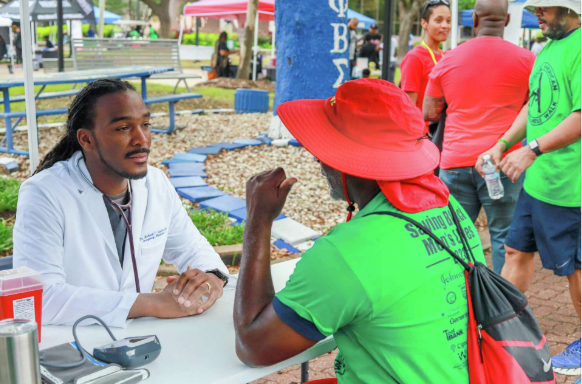
Dr. Henry leads AAMWA’s Real Men Real Talk (RMRT) initiative, which creates structured spaces for Black men to engage in conversations about mental health, emotional well-being, trauma, and personal growth.
The initiative provides access to care and continued support, including referrals to mental health services after sessions. AAMWA’s approach to mental wellness is rooted in their core message, “Get Checked Out, Not Checked In,” encouraging early conversations, preventive care, and connection to support before challenges reach a crisis point.
In the RMRT 2025 impact report for Franklin County, more than 3,500 people attended sessions, according to AAMWA. The report documented 485 mental health screenings, 121 referrals for continued care, and included participation from 50 mental health professionals. About 30 percent of participants were between the ages of 25 and 44.
The report also cited local public health data showing that suicide in Franklin County claims lives at an average age of 34, with firearms involved in nearly half of the cases.
Barbershops like Working Wonders and Pro One Barbershop continue to serve as safe spaces where Black men can get a haircut, talk, and open up. Columbus barbers urge men to “get checked out, not checked in,” reminding men not to delay getting support.