
Drivers of HIV Disparities Among Black Women
A Disproportionate Impact
Despite advances in prevention and treatments, Black women remain disproportionately affected by HIV.
According to the CDC, Black women account for roughly half of the new HIV cases among women, despite only making up 13 percent of the female population in the United States. This disparity reflects broader systemic patterns rather than individual behavior. Experts say these numbers point to deeper structural issues.
Dr. James Questel, family medicine physician and affiliate of Ohio State University, explains that the issue is not just the share of the diagnoses, but the level of risk.
“Although overall diagnoses have declined, Black women remain the most disproportionately affected group of women in the United States,” he says.
Beyond Individual Behavior
Ultimately, individuals make their own decisions about their health. However, those choices are shaped by the systems around them and their communities.
HIV disparities among Black women are not explained by behavior alone, but by gaps in prevention outreach, delayed testing, and limited engagement with healthcare systems. In addition, prevention systems, especially around Pre-Exposure Prophylaxi (PrEP), were historically designed with a focus on men.
“Many clinical risk assessment tools used to determine PrEP eligibility were developed primarily for men who have sex with men,” said Dr. Questel.
Addressing this disparity requires both increased accountability in how information is delivered and broader structural changes. Experts note that access alone does not ensure engagement. Medical mistrust also plays a role in how individuals interact with prevention and care.
“Medical mistrust is not irrational; it is rooted in real historical and present-day inequities,” said Perrie Gooden, founder of Paree Wellness Co.
Internalized Stigma and Mental Health

Mistrust and stigma shape Black women’s thoughts and experiences with HIV prevention. For many, these challenges are not abstract.
Dr. James Questel explains that many Black women experience anticipatory stigma, expecting rejection or discrimination before disclosing their status, which can delay testing, treatment, and support. “Psychological distress may also be compounded by intersectional stigma,” he notes, where HIV overlaps with racism, sexism, and socioeconomic marginalization, impacting mental health and engagement with care.
Common reactions to diagnosis include fear, shame, anxiety, and uncertainty about relationships and the future.
Misinformation continues to limit access to care. Modern antiretroviral therapy allows HIV to be managed as a chronic condition, and PrEP reduces the risk of contracting HIV from sex by about 99% when taken as prescribed. Yet many are unaware of this.
Community-Based Approaches to Prevention
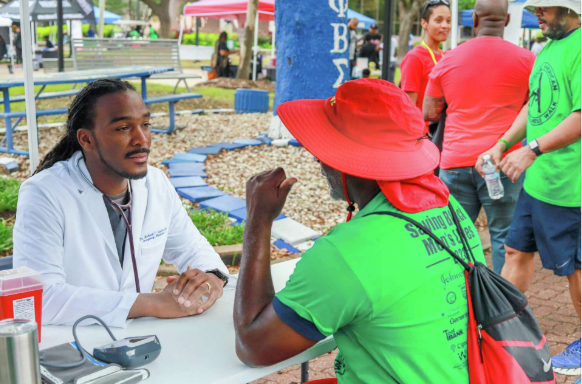
“When Black women are empowered with accurate information in environments they trust, they are more likely to take proactive steps toward prevention and care,” said Dr. Pamela Gregory, founder of Uplift Her. “That early engagement is critical to improving outcomes and reducing disparities over time.”

Uplift Her is an initiative under the African American Male Wellness Agency (AAMWA), addressing health disparities affecting Black women.
Across its initiatives, AAMWA has screened thousands of individuals and supported broad health education and awareness campaigns focused on preventive care. The organization hosts Black Men’s Wellness Day in 20 cities across the country, bringing large-scale screenings and health resources directly into communities. Its Uplift Her Women’s Wellness Experience, held in cities including Columbus and Houston, focuses on expanding access to preventive care and health education for women.
Where Do We Go From Here
Community-based organizations are often critical in bridging this gap, serving as trusted spaces where Black women can access education, testing, and prevention resources.
Dr. James Questel notes that improving care requires community-centered approaches, including partnerships with trusted organizations and institutions, hiring diverse healthcare staff, and integrating HIV prevention into primary care, reproductive health, and maternal health services.
Leveraging these approaches can help address disparities by confronting stigma, rebuilding trust, and strengthening culturally responsive care.