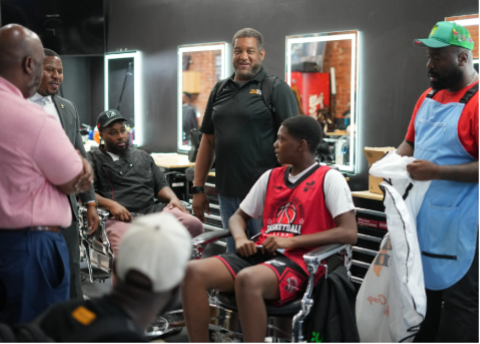
 (Caption: A local Houston barbershop)
Sometimes, the people who help individuals take their health seriously are not found in a hospital. They are in the barbershop, in the neighborhood and among the voices a community has trusted for years.
In 1978, Dr. Elijah Saunders helped advance efforts to train barbers and hairstylists to check blood pressure through his Urban Cardiology Research Center, bringing screenings into familiar community settings. Decades later, research would demonstrate the potential of that approach.
A landmark 2018 New England Journal of Medicine study found that Black men with uncontrolled high blood pressure who visited barbershops where pharmacists could prescribe medication experienced significantly greater blood pressure reductions than men whose barbers encouraged them to seek treatment elsewhere.
“Blood pressure was going down, blood pressure was going down, blood pressure was going down,” Byrd said. “And one time, I went in and had the target blood pressure rate, and I got emotional. That was the first time in years that my blood pressure was in control.”
His experience illustrates how trusted settings can connect people with care and help turn awareness into action.
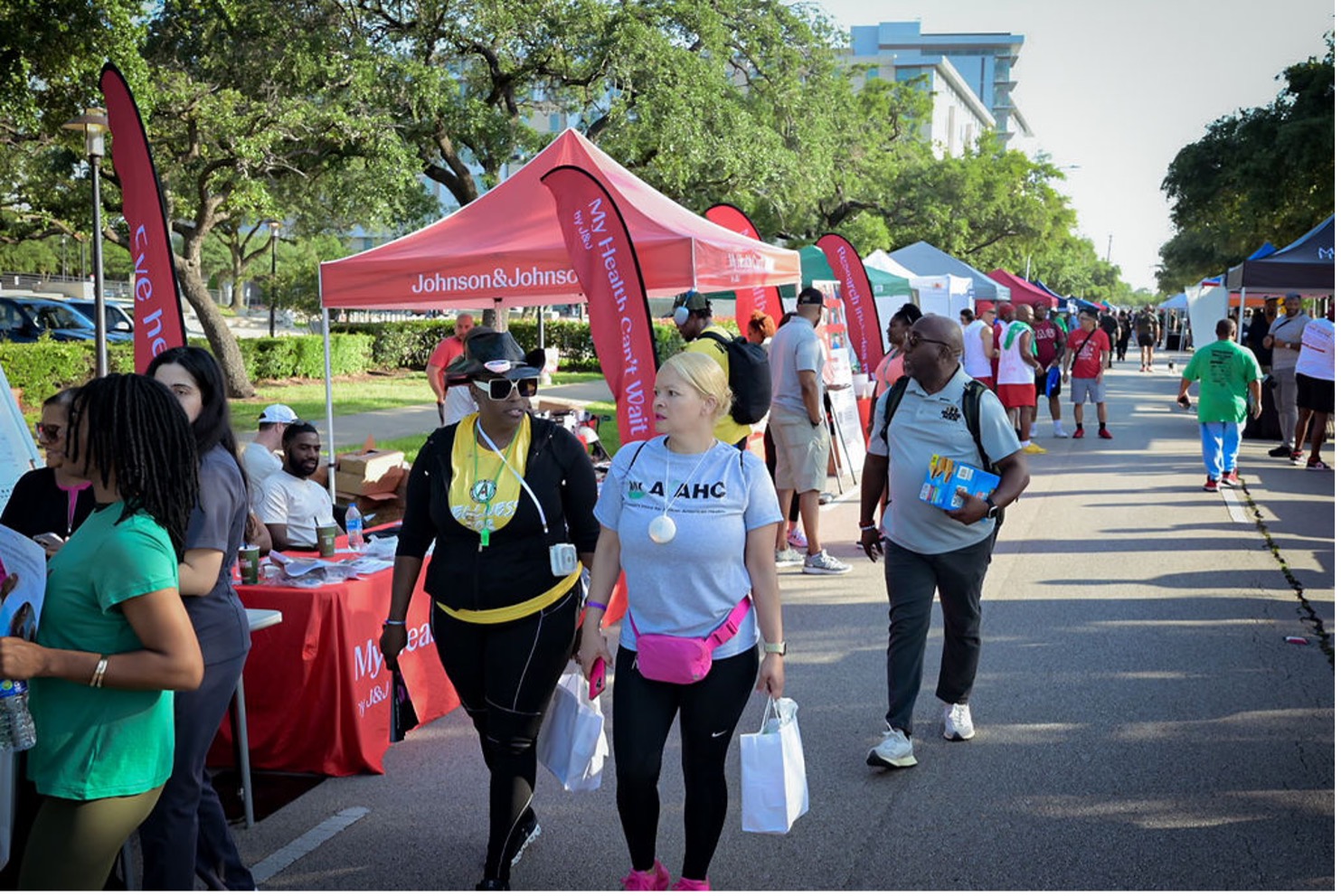 (Caption: Black Men’s Wellness Day in Houston, TX, 2026)
That same principle was visible at a recent Black Men’s Wellness Day in Houston, organized by the African American Male Wellness Agency (AAMWA). Dr. Harriet Hillard, a family physician who spent 33 years in practice before retiring, helped attendees understand their screening results and potential health risks.
“Folks are walking around and many of them have elevated blood pressure. They don’t have chest pains or dizziness; they have no clue,” Hillard told AAMWA. She warned that uncontrolled blood pressure can contribute to serious complications, including kidney disease. “We can talk with someone and tell them, ‘Hey, this is what’s going on with you. If we get on top of this, it can make a difference.’”
The event offered free blood pressure and cholesterol screenings, diabetes education and other health resources. It also honored Houston record producer Michael “5000” Watts, who died from cardiac arrest months earlier.
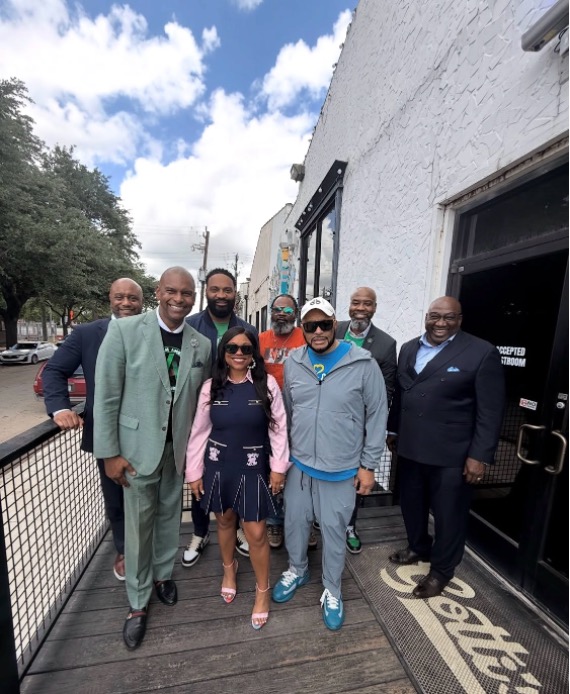 (Caption: Tammie Watts with The African American Male Wellness Agency leadership in Houston, TX.)
“My husband could sell out a box of whatever in an hour, if that, just because he said it was good. They know, and they trust him. They know he’s going to deliver for them. He’s not going to steer them wrong,” she told AAMWA.
Encouraging people to get screened and become more aware of their health, she said, was something that suited him.
Her words highlight a challenge in public health, making people aware of resources is only part of the work. People must also feel motivated to use them. Trusted community figures can help bridge that gap.
Through Black Men’s Wellness Day, AAMWA brings health education, screenings and community partners together to help people recognize risks and take steps toward appropriate care. Community outreach cannot replace healthcare providers or eliminate systemic barriers. However, when reliable information reaches people through trusted messengers, it can help make the first step toward better health more accessible.