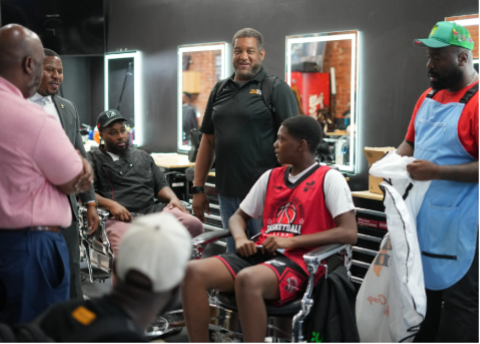
 (Caption: Kidney disease is developed by Black Americans at roughly five times the rate of White Americans.)
A health threat cannot be addressed if people do not know it exists.
For Black Americans, that can be especially consequential when it comes to kidney disease. Black Americans develop kidney disease at roughly five times the rate of White Americans, and the disparity becomes even more pronounced when kidney disease progresses to kidney failure.
The reasons for the disparity are complex, involving conditions such as high blood pressure and diabetes, as well as differences in access to care and other social and structural factors. Researchers have also identified genetic factors that can increase the risk of kidney disease among people of African ancestry.
One of the most significant is the APOL1 gene.
Certain APOL1 variants are common among people with African ancestry. Most people who carry one or two risk variants will not necessarily develop kidney disease, however, having two risk variants is associated with a substantially higher risk of developing APOL1-mediated kidney disease (AMKD).
 (Caption: Kidney disease can be caused by hypertension.)
The connection is particularly important in understanding focal segmental glomerulosclerosis (FSGS), a kidney disease that causes scarring in parts of the kidney’s filtering units. FSGS can cause protein to leak into the urine and, in some patients, progress to kidney failure.
For some Black patients, kidney damage associated with APOL1 variants may be overlooked or attributed to other common causes of kidney disease, including hypertension. By the time kidney disease becomes advanced, the damage can be permanent and the risk of serious complications increases. That makes earlier recognition particularly important as new treatment options become available.
Filspari (sparsentan), developed by Travere Therapeutics, a biopharmaceutical company focused on rare kidney diseases, was granted full approval by the U.S. Food and Drug Administration (FDA) on April 13, 2026. It is the first and only FDA-approved medicine for FSGS, indicated to reduce proteinuria in adults and pediatric patients aged 8 years and older without nephrotic syndrome.
But advances in treatment are only meaningful if the people most affected by a disease know that the disease exists and understand the importance of seeking care. That awareness gap was part of the conversation at Black Men’s Wellness Day in Houston, hosted by the African American Male Wellness Agency (AAMWA), where Travere Therapeutics provided education about kidney health and rare kidney diseases to attendees.
“Some people here that we met are actually on dialysis. They’re on a transplant list, and they don’t even know why. And that is alarming,” said a Travere representative.
Travere Therapeutics partnership with AAMWA extends their work into Black communities through Black Men’s Wellness Day. Black Men’s Wellness Day, AAMWA’s flagship health initiative, is held in more than 20 cities nationwide.
For Travere, BMWD provides a community-based platform to connect individuals who may not routinely encounter information about conditions such as FSGS and APOL1-mediated kidney disease, while AAMWA provides the reach and community presence to bring that information to people where they live.
“Companies are looking for strategic partners that can help them reach and engage the communities they want to serve,” said La’Var Howell, director of communications and public relations for AAMWA. “AAMWA gives companies like Travere a trusted platform to bring their expertise and resources directly into Black communities, helping them scale their impact and maximize the value of their investment.”
With access to a national network of Black communities, Travere can take its kidney-health education further as significant advances continue to reshape the rare kidney disease landscape.